 Keira J. Lucas, PhD
Deputy Executive Director
Dragonflies are often celebrated as nature’s mosquito hunters, and with good reason: both as aquatic nymphs and flying adults, dragonflies are skilled predators that feed on other insects, including mosquitoes. This has given rise to two persistent myths: 1. CMCD releases dragonflies to fight mosquitoes, and 2. Dragonflies can significantly reduce mosquito numbers in our area. While studies and observations clearly show that dragonflies do eat mosquitoes (Priyadarshana and Slade, 2023; Onen et al, 2024), there are important limitations that make them unreliable as a catch-all solution for mosquito control.
A Persistent Old Wives’ Tale
One of the most common myths we hear is that CMCD releases dragonflies to control mosquitoes. Residents even call on us to “drop the dragonflies,” as if we’ve got crates of them strapped into our planes, ready to parachute into action. It paints a hilarious mental picture: our pilots opening the hatch mid-air while squadrons of dragonflies leap out like tiny paratroopers, executing a precision mosquito strike. As entertaining as that sounds, it’s pure fiction.
This “old wives’ tale” seems to come from a well-timed coincidence: dragonflies often emerge right after the first big waves of mosquitoes emerge. Their perfectly timed arrival makes it look like they were deployed for mosquito duty, but we promise, no dragonfly air drops have ever happened in Collier County. While it makes for a fun and imaginative story, releasing dragonflies to control mosquitoes isn’t just unlikely, it’s wildly impractical.
Why Releasing Dragonflies Doesn’t Work
Dragonflies are amazing insects, but they’re not easy to raise or use for mosquito control. Dragonflies have complex life cycles and highly specific habitat needs that make them difficult to raise and release in any meaningful scale (Jourdan et al, 2019). Most of their life is spent as aquatic nymphs, living in ponds or wetlands for months or even years. These nymphs are territorial, predatory, and require clean, stable aquatic environments. Simply adding dragonfly nymphs into random bodies of water won’t guarantee they’ll live, let alone control mosquitoes.
In fact, a mosquito control program in Maine recently tried using dragonfly nymphs for mosquito control by outsourcing them from a third-party vendor (Lubelczyk et al, 2020). The results? A resounding defeat – no noticeable difference in mosquito larvae between treated and untreated areas. Worse, the attempt raised concerns about accidentally introducing non-native species, which can cause serious environmental problems.
Adult dragonflies, meanwhile, are powerful and mobile flyers but they are bad at taking orders. Even if you could release them in high numbers (which you can’t), there’s no way to make them stay in the area or focus exclusively on mosquitoes. They’ll fly off, follow the wind, or simply feast on whatever flying insects are most available. Their allegiance lies with their stomachs, not mosquito control.
Dragonflies are Outnumbered by Mosquitoes
While dragonflies do eat mosquitoes, they just don’t eat enough to put a dent in the massive mosquito populations we see here in Southwest Florida. In the best possible conditions (like in a controlled lab where mosquito larvae are the only food available), research shows that a single dragonfly nymph eats about 40 mosquito larvae per day on average (Priyadarshana and Slade, 2023). That might sound impressive, but what works in the lab doesn’t always hold up in the real world, and it definitely doesn’t even come close to keeping up with the numbers we deal with in Collier County, where mosquito larval density can reach upwards of 2 billion mosquitoes per acre of wetlands.
When it comes to adult dragonflies, there isn’t much research on exactly how many mosquitoes they catch and eat each day in the real world. Some estimates suggest they might eat anywhere from 30 to 100 mosquitoes daily. However, the National Park Service points out that, based on the size of a typical dragonfly’s stomach, the real number is probably much closer to the low end of that range (NPS, 2025).
And the challenge goes deeper than just appetite. Dragonflies have long, slow life cycles. They spend most of their lives underwater as nymphs, developing over months or even years in clean, stable ponds or wetlands. Meanwhile, mosquitoes are the definition of fast-breeding pests, multiplying at rates that put rabbits to shame, with most species going from egg to biting adult in under a week. So even if dragonflies are present and eating some mosquitoes, their slow development means they’re often outpaced and outnumbered by the mosquito population. The mosquitoes multiply much faster than dragonflies can grow, let alone start hunting. In short, by the time a dragonfly finishes basic training, the mosquitoes have already launched a full-scale offensive.
So, while dragonflies do eat mosquitoes, they don’t eat enough to meaningfully reduce the large mosquito populations seen in Southwest Florida.
Want to see how this plays out in the real world? Just visit the Florida Everglades in the summer, which is home to healthy populations of both dragonflies and mosquitoes. It’s the perfect battlefield to test their mettle. You’ll quickly notice that the dragonflies aren’t winning the battle against the mosquito swarms. So yes, dragonflies are fascinating and beneficial parts of the ecosystem but if you’re headed out there, don’t forget the bug spray!
A Valuable Partner, Not a Strategy We Can Depend On
That said, dragonflies are great to have around. Encouraging dragonfly-friendly habitats, like ponds with native plants and clean water, helps support a healthy, biodiverse environment that can naturally put some pressure on mosquito populations. In that sense, dragonflies are excellent partners in an integrated mosquito management program, but they are not, and never have been, the main act.
When it comes to real mosquito control, we need more than folklore and friendly flyers. We need strategic operations and science-based strategies: surveillance, education, source reduction, proven biological tools like mosquitofish and microbials, and precision use of larvicides and adulticides. These are our heavy artillery. Dragonflies are beautiful allies, but they were never meant to lead the charge.
Wait… If Dragonflies Are Collateral Damage from Aerial Treatments, How Can They Live Up to Their Mosquito Control Potential?
This is a common misconception, but in reality there’s no evidence that our mosquito control efforts harm dragonflies. Scientific studies that examine natural insect populations before and after treatment show that the precautions we take, such as using ultra-low volume (ULV) applications and carefully timing our treatments, are effective in protecting non-target species. These measures have been shown not to impact medium and large-bodies insects like dragonflies, butterflies, spiders, or honeybees at the population or ecosystem level (Jensen et al, 1999; Boyce et al, 2007; Davis and Peterson, 2008; Schleier and Peterson, 2010; Rochlin et al, 2022; Hart et al, 2024).
In fact, dragonflies hold their ground even when mosquito control missions are underway. Research has consistently shown that their populations remain stable, or even increase, following mosquito control treatments. One study (Boyce et al, 2007) found that aerial applications of synergized pyrethroids had no effect on these larger insects. Another study found that dragonflies increased in populations over the study period of five repeated aerial applications of naled (Rochlin et al, 2022). More recent research has shown that ground applications of pyrethroids also didn’t reduce the number of non-target insects like dragonflies post-treatment (Hart et al, 2024).
In short, our operations are designed to target mosquitoes specifically, and we take great care to avoid harming beneficial or non-target species like dragonflies. Importantly, all these studies confirmed that mosquito populations were successfully reduced at the time of treatment, showing that the products worked as intended without harming other wildlife (Jensen et al, 1999; Boyce et al, 2007; Davis and Peterson, 2008; Schleier and Peterson, 2010; Rochlin et al, 2022; Hart et al, 2024).
Our goal is to protect public health and comfort by controlling mosquitoes, and we work hard to do it in a way that also protects natural mosquito predators.
For more information on dragonflies in Florida, please visit: https://gardeningsolutions.ifas.ufl.edu/design/gardening-with-wildlife/dragonflies/
References
Boyce WM, Lawler SP, Schultz JM, McCauley SJ, Kimsey LS, Niemela MK, Nielsen CF, Reisen WK. 2007. Nontarget effects of the mosquito adulticide pyrethrin applied aerially during a West Nile virus outbreak in an urban California environment. J Am Mosq Control Assoc. 23: 335-339.
Davis RS, Peterson RKD. 2008. Effects of single and multiple applications of mosquito insecticides on nontarget arthropods. J Am Mosq Control Assoc. 24: 270-280.
Hart JD, Pandolfi A, Jones T, Jenkins DG. 2024. Ground-Based Pyrethroid Adulticides Reduce Mosquitoes But Not Nontarget Insects in Central Florida. J Am Mosq Control Assoc. 40:125-136.
Jensen T, Lawler SP, Dritz DA. 1999. Effects of ultra-low volume pyrethrin, malathion and permethrin on non-target invertebrates, sentinel mosquitoes, and mosquitofish in seasonally impounded wetlands. J Am Mosq Control Assoc. 15: 330-338.
Jourdan J, Plath M, Tonkin JD, Ceylan M, Dumeier AC, Gellert G, Graf W, Hawkins CP, Kiel E, Lorenz AW, Matthaei CD, Verdonshot PFM, Verdonschot RCM, Haase P. 2019. Reintroduction of freshwater microinvertebrates: challenges and opportunities. Biol Rev. 94: 368-387.
Lubelczyk CB, Elias SP, deMaynadier PG, Brunelle PM, Smith LB, Smith Jr, RP. 2020. Importation of Dragonfly Nymphs (Odonata: Anisoptera) to Control Mosquito Larvae (Diptera: Culicidae) in Southern Maine. Northeastern Naturalist. 27: 330-343.
Onen H, Kaddumukasa MA, Kayondo JK, Akol AM, Tripet F. 2024. A review of applications and limitations of using aquatic macroinvertebrate predators for biocontrol of the African malaria mosquito, Anopheles gambiae sensu lato. Parasit Vectors. 17: 257.
Priyadarshana TS, Slade EM. 2023. A meta-analysis reveals that dragonflies and damselflies can provide effective biological control of mosquitoes. J Animal Ecology. 92: 1589-1600.
Rochlin I, White G, Reissen N, Martheswaren T, Faraji A. 2022. Effects of aerial adulticiding for mosquito management on nontarget insects: A Bayesian and community ecology approach. Ecosphere. 13: e3896.
Schleirer JJ III, Peterson RKD. 2010. Toxicity and risk of permethrin and naled to non-target insects after adult mosquito management. Ecotoxicology. 19: 1140-1146.
National Park Service [NPS]. Species Spotlight – Dragonflies. Accessed: July 21, 2025. Website: https://www.nps.gov/articles/species-spotlight-dragonflies.htm
—
Dr. Keira Lucas serves as the Deputy Executive Director of the Collier Mosquito Control District, bringing a background in vector biology. She specializes in mosquito reproduction and biology, integrated pest management and pesticide resistance management, with experience in applying science-based strategies for effective and sustainable mosquito control.
 By Keira J. Lucas, PHD, deputy executive director for Collier Mosquito Control District
Natural mosquito control methods often attract a lot of interest, and for good reason. These options can be valuable tools, but it’s important to remember that no single method can eliminate mosquitoes entirely. Instead, natural tools work best when they’re used as part of a larger, balanced strategy called Integrated Mosquito Management. This approach combines multiple methods, including natural, chemical, and physical, to keep mosquito numbers low in a smart, sustainable way.
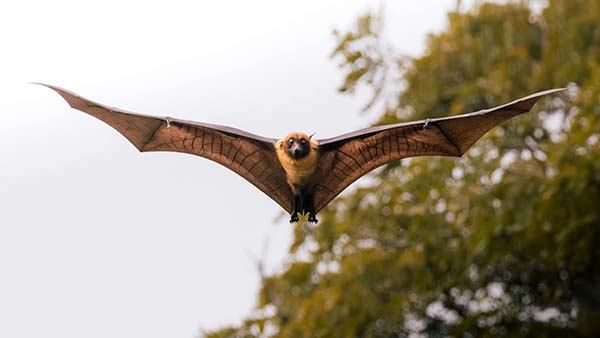
One natural solution that often gets people excited is bats. Since bats eat insects, many folks assume they’re great at eating mosquitoes. This idea has led to increased interest in building or buying bat houses to attract them.
But here’s the truth: while bats do eat some mosquitoes, most bat species don’t eat enough of them to make a big difference. So, while having bats around can be helpful in general pest control, they’re not the mosquito-fighting superheroes many people hope for.
Where Did This Idea Come From?
The belief that bats are major mosquito predators traces back to a 1960 study published in Animal Behaviour (Griffin et al 1960). In the study, little brown bats and Eastern small-footed bats (both of which are not present in Southwest Florida) were placed in an enclosed chamber with 2,000 mosquitoes. By morning, many of the mosquitoes were gone, leading to the assumption that bats can catch up to 1,000 mosquitoes in an hour.
It’s an eye-catching idea, but it doesn’t quite hold up in the real world. That experiment took place in a controlled setting, where mosquitoes were the only available food source. Out in nature, bats have more choices, and they usually go for bigger, more nutritious insects. Scientists who have looked at bat diets in the wild have found that although some bat species eat mosquitoes, mosquitoes make up only a small portion of most bat diets.
What Science Tells Us
What many people don’t realize is that, just like mosquitoes, not all bat species are the same, especially when it comes to what they eat and where they live. Florida is home to thirteen species of insect-eating bats, but not all of them are found in Southwest Florida, and mosquitoes aren’t a significant part of every bat’s diet. Each species has its own preferred habitat and feeding style, which means their impact on mosquito populations can vary greatly.
While a few bat species do specialize in eating mosquitoes, most are opportunistic feeders. They consume a wide variety of insects, typically choosing prey that offers the greatest energy return. Mosquitoes are small, low in nutritional value, and harder for bats to detect and catch. In comparison, larger insects like moths, beetles, and flies are easier to find and far more rewarding, making them the more common choice for most bat species.
One species in Florida known to include significant numbers of mosquitoes in its diet is the southeastern bat (Zinn and Humphrey, 1981; Ober, 2020; Hughes et al, 2021). One Florida colony of southeastern bats was estimated to capture a remarkable 15 tons of mosquitoes annually! However, this species native range does not encompass Southwest Florida, so it’s unlikely to be found here in large numbers.
Bats that are common in the region, like the Seminole bat and evening bat, have been shown to eat some local mosquito species, but only in small amounts. More importantly, studies show they rarely consume the invasive mosquitoes that spread tropical diseases like dengue (Hughes et al, 2022).
The Brazilian free-tailed bat is the most abundant bat species in Florida and the one most likely to take up residence in bat houses (Florida Bat Conservancy, 2020). However, these bats prefer feeding on larger insects such as moths and beetles (McWilliams, 2005). While mosquitoes have been found in their diet, they do not encompass a significant portion of their diet.
Even though bats don’t eat enough mosquitoes to control the large mosquito populations seen in Southwest Florida, they still play a beneficial role in insect control. Large bat colonies can help reduce the number of flying insects in a given area, including some mosquitoes (Reiskind and Wund, 2013). And there’s an added benefit: many insects, mosquitoes included, tend to avoid areas where they hear bat echolocation calls, making the presence of bats a natural deterrent (Ober, 2020). So, while they aren’t a stand-alone solution for mosquito control, bats are still a helpful part of the ecosystem.
Bats Matter, But They’re Not a Mosquito Solution
Bats play a vital role in maintaining a healthy environment, and at CMCD, we strongly support bat conservation efforts. This includes initiatives focused on safeguarding endangered species such as the Florida Bonneted Bat. Expanding and preserving bat habitats helps promote biodiversity and supports the ecological balance that benefits us all.
That said, when it comes to mosquito control, bats are not a reliable solution on their own. While some species may eat mosquitoes occasionally, research shows that most bats prefer larger, more energy-rich insects like moths and beetles. As such, bats are not effective as a primary strategy for reducing mosquito populations.
So, if you’re considering installing bat houses or otherwise attracting bats to your property, we encourage you to do so as a way to support wildlife conservation and not as a solution to manage mosquitoes. Enhancing bat habitat is a wonderful step toward supporting biodiversity, but it should complement, not replace, scientifically proven mosquito control methods.
For more information on building an effective bat house, please visit: https://edis.ifas.ufl.edu/publication/UW290. If you choose to install a bat house, keep in mind that bats can carry diseases such as rabies and should never be handled.
For more information on bat conservation, please visit: https://myfwc.com/wildlifehabitats/wildlife/bats/
References
Florida Bat Conservancy. (2020) Florida Bat’s. Retrieved from: https://www.floridabats.org/bats-of-florida.html
Griffin DR, Webster FA, Michael CR. (1960) The echolocation of flying insects by bats. Animal Behaviour. 8: 141-154.
Hughes M, Braun E, Ober H. (2021) Big bats binge bad bugs: Variation in crop pest consumption by common bat species. Agriculture Ecosystems and Environment. 314:107414.
Hughes MJ, Braun de Torrez EC, Buckner EA, Ober HK. (2022) Consumption of endemic arbovirus mosquito vectors by bats in the southeastern United States. J Vector Ecol. 47: 153-165.
Ober HK. (2020) Insect Pest Management Services Provided by Bats. Gainesville: University of Florida Institute of Food and Agricultural Sciences. https://edis.ifas.ufl.edu/publication/UW289
Reiskind MH, Wund MA. (2009) Experimental assessment of the impacts of northern long-eared bats on ovipositing Culex (Diptera: Culicidae) mosquitoes. J Med Entomol. 46:1037-44.
McWilliams LA. (2005) Variation in Diet of the Mexican Free-Tailed Bat (Tadarida brasiliensis mexicana), Journal of Mammalogy, 86(3), 599–605.
Zinn TL, Humphrey SR. (1981) Season food resources and prey selection of the Southeastern Brown Bat (Myotis austroriparious) in Florida. Florida Scientist. 44: 81-90.
 Keira J. Lucas, PhD
Deputy Executive Director
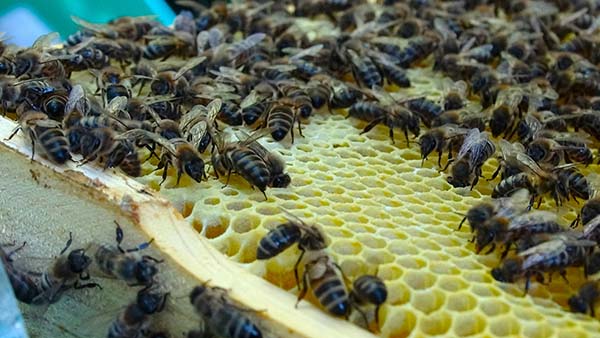
When it comes to understanding how mosquito control affects other species, few have been studied more closely than the honey bee. These hardworking pollinators, though not native to the United States, play a crucial role in our agricultural economy by pollinating countless crops and producing the honey we enjoy. In recent years, honey bee populations have faced alarming declines, sparking worldwide concern and extensive scientific research. Because mosquito control products often contain broad-spectrum pesticides, some people worry that these treatments harm honey bees and contribute to colony collapse.
It’s important to remember that mosquito control programs aim to keep honey bee colonies healthy while reducing the risk of mosquito-borne diseases and keeping our state a comfortable place to live, work, and visit. At the Collier Mosquito Control District (CMCD), many of our staff entered this field out of a love for insects, including honey bees! We employ a diverse team of scientists, from entomologists to environmental scientists, who work together toward a shared goal: to protect public health and comfort while practicing responsible environmental stewardship and respecting pollinators.
So, the question remains: Is mosquito control really to blame for the honey bee’s troubles?
Do mosquito control treatments impact honey bees?
The mosquito control products most often questioned are adulticides, which are products used to target adult mosquitoes. And for good reason! When these products are used incorrectly, they can indeed cause harm! One tragic incident in South Carolina resulted in the loss of 2.3 million foraging bees across 46 hives after a mosquito control product was applied during the daytime (Daley, 2016). This event highlights why it’s essential to follow all product label directions and to notify local beekeepers before treatments occur so they can take precautions.
However, when used correctly, scientific research shows that mosquito control applications have little to no lasting impact on honey bees, but are still exceedingly effective against mosquitoes (Hester et al. 2001, Zhong et al. 2004, Boyce et al. 2007, Chaskopoulou et al. 2014, Rinkevich et al. 2017, Pokhrel et al. 2018, Crowder et al. 2025).
In one 2017 study, scientists exposed mosquitoes and honey bees in cages to four commonly used mosquito control products applied by truck at different distances (Rinkevich et al. 2017). The results were reassuring: mosquitoes were effectively controlled, while honey bee deaths remained very low, even at close range. Beyond about 200 feet, there was little to no impact on bees at all. A follow-up study in 2018 found similar results, in which honey bee colonies showed no signs of poor colony health or pesticide exposure after truck-based applications (Pokhrel et al. 2018).
In 2000, scientists in Manatee County, Florida, studied how nighttime aerial mosquito control applications using Dibrom (naled) affected honey bee hives using modern ultra-low volume methods (Zhong et al. 2004). They placed hives in treated areas, and measured how much of the product settled on the ground and how many bees died afterward. The study found that bee deaths only increased when large amounts of the product were present and when bees were gathered outside their hives during the application. In most cases, residue levels were much lower, and there was no difference in bee deaths or honey production between treated and untreated hives.
A more recent two-year study in Salt Lake City, Utah, also examined how aerial applications of Dibrom affected honey bee health (Crowder et al. 2025). Researchers placed hives both inside and outside areas where mosquito control applications occurred and monitored bee health over time. The findings were encouraging: colonies in treated areas were just as healthy as those in untreated locations, with no significant differences in bee deaths, hive resources, or parasite levels. The researchers found that fungal infections, high temperatures, and seasonal changes were much greater factors in bee health than mosquito control applications.
The research above applies to mosquito control programs that carefully follow science-based practices, like those used by CMCD. It doesn’t apply to every type of chemical use or application method. What we know from many studies is that diseases and parasites (such as Varroa mites), not mosquito control, are the main reasons for poor honey bee colony health (Crowder et al. 2025, Lamas et al. 2025). When mosquito control products are used properly and responsibly, they pose little to no risk to honey bee colonies.
What Beekeepers in Florida Should Know
In Florida, all beekeepers are required by law to register their hives with the Florida Department of Agriculture and Consumer Services (FDACS). FDACS inspectors help ensure that hives are healthy and free from pests, viruses, and invasive bee species. Beekeepers can also work with the agency to identify any possible pesticide exposure.
If you’re a hobby beekeeper, it’s important to take time to learn and follow best management practices to keep your colonies strong and healthy.
While mosquito control applications pose very little risk to honey bees, some beekeepers may still want to take extra precautions, and we fully support that! Local beekeepers are encouraged to sign up for advanced treatment notifications by visiting our website, so they can stay informed about upcoming applications and take any precautions they deem necessary.
Bees are most vulnerable to mosquito control products when they are outside the hive. To reduce their exposure, beekeepers can take several simple precautions. Move hives under cover, such as beneath a roof overhang or inside a well-ventilated garage, to shield them from direct contact. Adding an extra super can also help by giving bees that tend to cluster outside more space. You can further protect colonies by loosely placing a piece of plywood or a tarp “tented” like a roof over the hives. However, do not completely seal or wrap colonies, as restricted airflow can quickly cause them to overheat and die. These temporary measures can significantly minimize risk during mosquito control applications while keeping colonies healthy and safe.
If you ever suspect pesticide poisoning in your bees, especially following a mosquito control treatment in your area, report it immediately to your local FDACS apiary inspector and to CMCD. Prompt reporting helps investigators respond quickly and increases the likelihood of identifying the cause of the issue.
To report pesticide poisoning to your local apiary inspector, please visit: https://www.fdacs.gov/Divisions-Offices/Plant-Industry/Bureaus-and-Services/Office-Locations/Apiary-Inspector-Directory
To sign up to receive treatment notifications, please visit: https://cmcd.org/treatment-notifications/
References
Boyce WM, Lawler SP, Schultz JM, McCauley SJ, Kimsey LS, Niemela MK, Nielsen CF, Reisen WK. 2007. Nontarget effects of the mosquito adulticide pyrethrin applied aerially during a West Nile virus outbreak in an urban California environment. J Am Mosquito Control Assoc. 23: 335-339.
Chaskopoulou A, Thrasyvoulou A, Goras G, Tananaki C, Latham MD, Kashefi J, Pereira RM, Koehler PG. 2014. Nontarget effects of aerial mosquito adulticiding with water-based unsynergized pyrethroids on honey bees and other beneficial insects in an agricultural ecosystem of north Greece. J Med Entomol. 51: 720-724.
Crowder J, Rochlin I, Bibbs CS, Pennock E, Browning M, Lott C, Barth A, White GS, Faraji A. 2025. Manages honey bees, Apis mellifera, face greater risk from parasites and pathogens than mosquito control insecticide applications. Sci Total Environ. 964: 178638.
Daley. 2016. Mosquito sprayers accidentally “nuke” millions of bees in South Carolina. Smithsonian Magazine. Date Accessed: [October 10, 2025}. URL: https://www.smithsonianmag.com/smart-news/mosquito-sprayers-accidentally-nuke-bees-south-carolina-180960341/
Hester PG, Shaffer KR, Tietze NS, Zhong H, Griggs NL. 2001. Efficacy of ground-applied ultra-low-volume malathion on honey bee survival and productivity in open and forest areas. J Am Mosq Control Assoc. 17: 2-7.
Lamas ZS, Rinkevich F, Gatavito A, Shaulis A, Boncristiani D, Hill E, Chen YP, Evans JD. 2025, preprint. Viruses and vectors tied to honey colony losses. BioRxiv.
Pokrel V, DeLisi NA, Danka RG, Walker TW, Ottea JA, Healy KB. 2018. Effects of truck-mounted, ultra low volume mosquito adulticides on honey bees (Apis mellifera) in a suburban field setting. PLoS One. 13: e0193535.
Rinkevich FD, Margotta JW, Pokhrel V, Walker TW, Vaeth RH, Hoffman WC, Fritz BK, Danka RG, Rinderer TE, Aldridge RL, Linthicum KJ, Ottea JA, Healy KB. 2017. Limited impacts of truck-based ultra-low-volume applications of mosquito adulticides on mortality in honey bees (Apis mellifera). Bull Entomol Res. 107: 724-733.
Zhong H, Latham M, Payne S, Brock. 2004. Minimizing the impact of the mosquito adulticide naled on honey bees, Apis mellifera: aerial ultra-low-volume application using a high-pressure nozzle system. J Econ Entomol. 97: 1-7.
—
Dr. Keira Lucas serves as the Deputy Executive Director of the Collier Mosquito Control District, bringing a background in vector biology. She specializes in mosquito reproduction and biology, integrated pest management and pesticide resistance management, with experience in applying science-based strategies for effective and sustainable mosquito control.
 In this election, Collier County voters face a clear choice: a proven, responsible approach to mosquito control that protects public health—or untested ideas that could leave families more vulnerable to mosquitoes and the diseases they carry.
Re-electing Ed Brandt means continuing a healthy, science-based strategy that effectively controls mosquito populations while being good stewards of our environment and taxpayer dollars. As Vice Chair/Secretary of the Collier Mosquito Control District, Ed has helped guide policies grounded in data, surveillance, and integrated pest management that deliver real results for our community.
His opponents advocate stopping effective treatments and replacing them with questionable, unproven methods. For example:
These ideas ignore decades of research and the District’s successful track record of balancing adult and larval control with environmental responsibility.
Ed Brandt stands for practical, effective mosquito control that keeps our neighborhoods livable, protects public health, and respects Florida’s unique environment. He supports continuing the District’s use of targeted, responsible methods—including safer, plant-based options where appropriate—while rejecting risky experiments.
The choice is clear. A vote for Ed Brandt is a vote for a healthy, protective, and proven approach to mosquito control in Collier County.
Please re-elect Ed Brandt to the Collier Mosquito Control District on Election Day.